Tuesday, October 31, 2006

Know nothing press

In today's column, Polly Toynbee writes:

parents still overwhelmingly oppose religious schools - by 64% in a Guardian/ICM poll.

Actually, it's not parents, they don't oppose religious schools (but they do oppose state funding) and the, er, Guardian thinks that the timing of the poll may have affected the results:

The survey reveals that following last month's terror attacks, the majority of the public are uneasy about the proposals, with 64% agreeing that "the government should not be funding faith schools of any kind". (source)

-o0o-

She also writes:

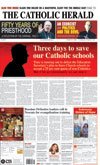
Catholics led the charge, with "Three days to save our faith schools" blazoned across the Catholic Herald.

At the time of writing, you could see the front page on the Catholic Herald website, which clearly shows the headline to be "Three days to save our Catholic schools". It takes a rare skill to be able to misquote a "blazoned" headline.

-o0o-

She also writes:

But the UK and Denmark are the only countries where drinking is on the rise.

Here, her research methodology is unusually clear -- she read yesterday's paper, when Martin Plant had a letter published in the Guardian which said:

Britain is the only country in western Europe (apart from Denmark) where alcohol consumption is still rising. (source)

Note the omission of "in western Europe" from Polly's column. In fact, there are many countries where alcohol consumption is on the increase. At the World Resources Institute online database, for example, you can pull up litres of alcohol consumed per adult in a number of countries with trends -- and it shows increases in countries from Albania to Zimbabwe.

-o0o-

UPDATE: Mr Eugenides has written to me, taking a break from posting the sublime, to point out that when Polly writes:

alcohol now costs 54% less in real terms than it did in 1980.

it contrasts with the Economic and Social Research Council's take on it:

In real terms, since 1981 the price of alcohol relative to incomes has decreased by 54 per cent.
[emphasis added]

Which is of course not the same thing at all.

Friday, October 27, 2006

Anyone have a bridge that needs painting?

There's more from Polly's column today (see previous post for the bulk of it, though).  Polly writes:

On behalf of shareholders, simple questions should be put: why do directors pay themselves obscene sums, a 28% rise in the boardrooms this year, all of it stolen from citizens' pension funds and Peps?
[emphasis added]

Compare that with this, from the Guardian on 2 October 2006:

Directors' pay at Britain's top companies soared by 28% last year, more than seven times the rate of average pay and 11 times the current rate of inflation.
[emphasis added]

Now just plain making stuff up

In today's column, Polly Toynbee writes about the proposed companies bill, and specifically a clause to require companies to disclose information about their suppliers.  She writes:

The Financial Times all this week has run a loud and intimidating campaign against one clause, with a front-page splash and yesterday's thundering leader attacking industry minister Margaret Hodge. The subclause they oppose is the only item in this monumental bill that concedes anything to the lobby for stronger corporate social responsibility to protect the environment and communities.

This is part of a broader charge against the FT, that it has become the mouthpiece of the CBI:

The growing influence of the CBI over the once independent-minded and more nuanced Financial Times is sad to behold: now that its former editor Richard Lambert heads the CBI, he seems to not only adopt belligerent CBI narrow-mindedness but to cast the FT under the CBI's sway too.

Actually, the FT leader (link here, possibly requiring a subscription) is less than thundering in its criticism of the clause:

Yet the harm is less in the clause than in how it was introduced.

The FT leader agrees with Polly that on the face of it the clause requires something similar to the Operating and Financial Reviews that were originally proposed, but then vetoed by Gordon Brown.  In fact, the FT says:

At first sight, the new proposal for companies to disclose information about suppliers looks similar to the government plans for statutory operating and financial reviews (OFRs) that were in the bill until the Treasury decided to scrap them. This type of broader business commentary can help to focus attention on strategic questions beyond the next quarterly earnings figures. But the original OFR proposals were firmly underpinned by detailed accounting standards in a way that the current plans are not. This makes them harder for businesses to interpret. The DTI promises guidance: that must emphasise that the information need be given only where it is material and is at directors' discretion. Even then, there are likely to be high-profile and costly legal challenges as the non-governmental organisations that have pressed for the proposal try out how it is being applied in practice.

Read that carefully -- the complaint is not about the requirement to report, but rather that the requirement to do so in an ambiguous way generates uncertainty.

Indeed, Polly complains that:

The spectacle of the CBI and the Institute of Directors in full war cry is enough to frighten any government. How arrogantly they stamp, rampage and threaten mere elected politicians.

(I think in psychology this is called projection).  However, compare that with the FT leader which says that:

In their dealings with government, businesses should not always expect to get their own way. They do need consultation and certainty.

Thus, apparently, the mouthpiece of the CBI in full war cry, arrogantly stamping, rampaging and threatening.

-o0o-

Polly also writes:

An ICM poll shows that 90% of the public want companies to be legally obliged to report on their social responsibilities

Actually, according to the CORE press release (downloadable here):

90% of voters think that “the Government should set out enforceable rules to ensure companies are ‘socially responsible’, for example to ensure companies do not damage the environment.”

That's not "legally obliged to report".

-o0o-

When writing about CORE, Polly Toynbee writes:

Campaigners for greater openness are the Corporate Responsibility Coalition (Core) and the Trade Justice Movement, with over 130 organisations and 9 million members.

CORE represents 130 organisations, and the TJM claims to be:

a coalition of over 80 UK organisations with over 9 million individual members.
(source is a pdf, link here)

That's not having 9 million members.  The list of member organisations is here, and includes, for example, the Church of England and UNISON.  I think it's a bit rich to describe their members as being members of the TJM.

-o0o-

Polly also writes:

But imagine a government that dared stand up to them [i.e. CBIand IoD].  On behalf of shareholders, simple questions should be put: why do directors pay themselves obscene sums, a 28% rise in the boardrooms this year, all of it stolen from citizens' pension funds and Peps?

Skip lightly over the rhetoric about "stolen", and that of course shareholders do ask these sorts of questions without needing the state to do it for them according to the Observer, but consider the implication for a moment that the only shareholders in UK companies are pension funds and PEPs, and rightly discard it for the ill-informed and facile assumption that it is.
Tuesday, October 24, 2006

Disgraceful

In today's column about Velcade, Polly Toynbee writes:

Disgracefully, Andrew Lansley, the shadow health secretary, claimed at the weekend that he would prescribe the drug, adding an absurd promise that he would also "renegotiate" its price with the manufacturers. As if.

Paying no attention to Nice's rebuttal, ITV's The Sunday Edition paraded three patients with bone-marrow cancer desperately seeking the drug, understandably anxious for any shred of extra hope. Who wouldn't be?

Andrew Lansley's interview on The Sunday Edition is, at the time of writing, available online here.  What he actually said was:

I think we should give patients the drug and allow the NHS to negotiate with the drug company concerned, Johnson and Johnson, in order to arrive at a price for the drug that is cost-effective.  Because, the problem is at the moment that NICE have no ability to negotiate with the drug company.  The price is given.

When asked by the interviewer:

So you are very clear then that if you were Health Secretary, and indeed the current Healthy Secretary should give the drug to myeloma sufferers now?

He replied:

Yes, through that process [the one described above] and I do have to be clear about this.  Because there is no point in having NICE and then taking the decision yourself.  They do a professional job at trying to assess cost-effectiveness.  But the price is given to them.  They can't negotiate it.  I think what the NHS should be doing, what the Secreatry of State should be doing is negotiating the price with the drug company, doing in effect a risk-sharing deal with drug company so the NHS can continue to treat patients and depending on the effectiveness of the drug... I mean Jacky [one of the three sufferers who were "paraded" by ITV on the television.  Note that their website is here] was saying to us just a few minutes ago she thinks it can prolong life by two or three years.  Well, if that is proven in a population of myeloma sufferers who get the drug, then actually it would be a cost-effective drug.

This is not Lansley trying to "prescribe" the drug -- not something which would be terribly practical in any case for someone who is not a doctor.

-o0o-

Polly also writes:

Scotland has approved it for only a tiny number of patients in the last weeks of life.

Actually, no.  The SMC says that Velcade is:

accepted for use within NHS Scotland for the treatment of patients with multiple myeloma who have already received at least two therapies, have seen their disease progress on the last therapy and who are unresponsive to alternative licensed treatments for this stage of the disease. [Source]

This is not the same as "in the last weeks of life."

-o0o-

She also says that:

Its first trial of strength with the drug companies was its defining moment. When Nice said no to the flu drug Relenza (except for exceptional conditions), Glaxo threatened to pull out of Britain in revenge. Nice held firm, Glaxo stayed.

Actually, Frank Dobson said no to Relenza (source) in October 1999.  Sir Richard Sykes complained about "recently enforced price cuts" and criticised "the government's innaction over parallel imports" and "condemned the goverment's failure to maintain the level of science study among sixth formers despite its claim to favour a science and technology-based society." (source).  According to the Guardian:

Although the spokesman said Glaxo - which spends more than 50% of its research budget in, but derives only 6% of its sales from, the UK - was not threatening to move offshore, he added: "These factors call into question the attractiveness of the UK to a global company." The company suggested that others in the sector might also consider moving out of the UK.

"If you continue to make the environment antagonistic to this industry then by defini tion it will start to move elsewhere," said Sir Richard.

That's not a threat to pull out of Britain.

Nonetheless, NICE "held firm" for about a year before the Guardian was reporting that "Relenza receives limited approval" in November 2000 (source).

Thursday, October 05, 2006

Wariness replaced by weariness

I'll be taking a break until the end of October.

Tuesday, October 03, 2006

In a manor secret

In today's column, Polly Toynbee refers to the Coleshill Manor story. She thinks it employs a

secret staff of 50

So secret, in fact, that they advertise for jobs (see here for Google's cache of a now expired job advertisment, which was running on 21 June). So secret that Michael Howard publicised his visit to it on election day 2005 (source). So secret that the Telegraph had a story about it in March 2005.

The funding mechanism for it may be contentious, but the staff are not secret.

-o0o-

She still has trouble accurately reproducing quotes. She claims Cameron said:

"the government which instinctively believes everything is the state's responsibility"

He actually said:

"These last nine years have been the story of a Government which instinctively believes, whatever it says, that everything is the state's responsibility," (source, emphasis added).

She claims he said:

"People, families, communities, businesses, to step up to the plate and ... actively do good things."

He actually said:

"We need people, families, communities, businesses to step up to the plate and understand that it's not just about stopping the bad things, it's about actively doing the good things" (source, emphasis added).

Friday, September 29, 2006

And she thinks he's an attack dog?

In today's column, Polly Toynbee quotes extensively from:

Deborah Mattinson, the chief executive of Opinion Leader Research

A shame she doesn't bother to get the job title right.

-o0o-

She writes about Frank Luntz's polling exercise for Newsnight thus:

He must have been excited by a spectacular item on Newsnight. The US pollster Frank Luntz explored the popularity of Labour's possible leadership contenders. He showed brief video clips of each to 30 Labour-minded voters, who turned dials up and down as they watched each contender speak. Most of the candidates' clips seemed chosen for pallid dullness - except for the crucial two: one showed Brown a bit hesitant when interviewed under pressure after the coup attempt. The other showed Reid in full-on harangue: "Any court judgment that puts the human rights of foreign prisoners ahead of the safety and security of millions of British citizens is wrong! Full stop. No qualification!" Of course Reid beat Brown by miles. (Watch it yourself on the Newsnight website).

It certainly is worth watching. At the time of writing, you could watch it here. I would thoroughly recommend it; Polly is distorting it quite badly. The session lasted three hours, and even before the video clips -- long before the video clips -- initial reactions were gathered, just using photographs of the candidates. At this stage, only one out of the panel of thirty thought that Gordon Brown could lead the Labour party to victory in the next general election (about 2m05s), and someone who knows their Shakespeare better than Polly describes Brown as "Brutus", again long before the videos are shown (about 5m20s). Polly also neglects to mention the strong, positive response to Brown giving a speech (at about 8m30s).

And, of course, the quote she attributes to Reid is not what he actually said (at about 12m05s in the video clip), which was:

Any court judgment that puts human rights of foreign prisoners ahead of the human right to safety and security of the millions of the UK citizens is a wrong decision. Full stop. No qualification.

After Wednesday's inaccurate quote, I suppose I shouldn't be surprised. But I confess to still being shocked when I see a quality newspaper print something in quote marks which was not said.

Wednesday, September 27, 2006

The un-quote

In today's column, Polly Toynbee writes of Blair's farewell speech:

The deftness of his opening Cherie joke - "She won't run off with the bloke next door" - was all the reminder they needed.

I'm enough of an old-fashioned pedant to think that when you put something between quote marks, it should be what someone actually said. Polly clearly disagrees. What Blair actually said was:

"At least I don't have to worry about her running off with the bloke next door."

This is according to the Guardian, the BBC, the Herald, the Telegraph, The Times, the Independent, the Financial Times, the Mirror, and, well, you get point. You can even watch the speech here -- the quote comes at about 1m50s.

Polly's disdain for the truth is a thing of wonder.

Tuesday, September 26, 2006

Whoa, Manchester

In today's column, Polly Toynbee writes:

Labour rules on the mandate of just a quarter of the electorate.

Would that it were a quarter of the electorate, in fact it is comfortably below (source).

And rules? Rules? I thought they governed.

-o0o-

His good idea this week has been devolving within Whitehall - at last creating a sensible divide between the board (ministers) setting the direction and the executive (trained professionals) running things.

Make that last week.

-o0o-

There is no reason not to start by introducing the alternative vote right away - giving voters the right to place their preferences in 1,2,3 order instead of an X. [...] Jack Straw, Charles Clarke and Alan Milburn are among diverse recent alternative-vote converts.

There is a very good reason -- it is called Arrow's Impossibility Theorem, which proves that no voting system which relies on ranked preferences can produce a fair result if there are more than two options (the original article was published in the Journal of Political Economy in 1950). The Alternative Vote system (aka Instant-runoff voting) has a number of flaws -- e.g. it is possible for Candidate 1 to be elected even if a majority of voters prefer Candidate 2 to Candidate 1 (see the wikipedia page on Alternative Vote for more detail). Now, this doesn't mean we shouldn't introduce AV, but it does show that it is flawed, it is one of several necessarily flawed alternatives, and we need to work out what problem we're trying to solve before introducing something "right away".

And since when were three middle-aged white men considered diverse?

A little White truth-seeking

On GU's Labour conference podcast yesterday (MP3 here), hosted by her colleague Mike White, Polly Toynbee said this (about 14m50s in):

TOYNBEE: ... Tony Blair took such a very different view about Iraq to all of the rest of the people of Europe, who were 90% against going into Iraq, so it was we who stuck out like a sore thumb on that...

WHITE: Ooh, I'm going to check that percent.

You'd be wise to, Mike. Start with Pew, who on 18 March 2003 (pdf link here) showed that opposition in France was 75%, and 69% in Germany. Go on to Gallup, who in January 2003 didn't show opposition at or exceeding 90% in any European country. Even Noam Chomsky doesn't quite have the audacity to claim 90% opposition. On 9 March 2003 he said:

In Italy, it's reached almost 90 percent opposition to war under any conditions, and close to that in Spain. [emphasis added]

To be fair, one poll did show 91% opposition in Spain, but this was after the war started, and is hardly pan-European.

Friday, September 22, 2006

National press unreliable? I wonder why.

In today's column (see previous post for link), Polly also writes:

There is a sharp difference between recent patients and those who draw their view only from media anecdotage or from bad-mouthing friends among the 1.2 million grumbling NHS staff. Polling shows that patients are overwhelmingly pleased with their GPs and hospitals - but voters who haven't used hospitals are unreasonably dissatisfied.

Again, the actual research is less shrill (see post below for link to it).  For starters, the polling clearly does not show that people "who haven't used hopsitals are unreasonably dissatistified" -- there is reliable no way of testing the "reasonableness" of their dissatisfaction.

As for where people get there information about the NHS, the situation is more nuanced than "media anecdotage" and friends who work for the NHS.  Page 8 of the research shows that people also get their information from leaflets, direct mail, and from friends who don't work in the NHS.  The most favourable source of information (leaflets in GPs' surgeries) are also thought to be the most reliable (only 12% think them unreliable).  The most unfavourable source of information (the national press) is also thought to be least reliable (51% find the national press unreliable.  I can't think why).

-o0o-

Polly also writes:

...the NHS is flush with cash. Pay rises have made UK doctors and nurses the best-paid in the EU: dentists now earn £150,000pa.

Compare that with this quote from Liam Byrne in Hansard:

Most dentists who provide national health service primary dental care services are not paid on a salaried basis, but through a system of NHS fees and other payments that go towards the costs of running a dental practice as well as the dentist's net income.

[...]  DPB payment data show that on average, a dentist with a reasonable NHS commitment in 2004–05 in the GDS received gross GDS income of about £154,350. Dentists with a reasonable commitment are defined as those with gross fee earnings of £59,100 or more. These averages covered some 7,640 GDS principal dentists who worked throughout the year 2004–05.  HM Revenue and Customs information from dentists' tax returns show that the average ratio of expenses to gross earnings for a highly committed NHS dentist is around 52 per cent. (2003–04 tax year). The same source gives average net income of a highly committed NHS dentist from all sources as £78,600 in the tax year 2003–04. Average expenses were about £85,200. This information is taken from the tax returns of 392 GDS principal dentists who were in non-associate business arrangements for whom the tax year ended between January and March 2004.

Based on the data from these sources, the Department estimates that a highly committed GDS dentist earns an average NHS income of around £80,000 in 2005–06.

This is not the same as earning £150,000 a year -- you do actually have to deduct the expenses.

Correlatus belli

In today's column, Polly Toynbee writes:

If the Iraq analogy seems over the top, consider this: Ipsos Mori finds that attitudes towards the NHS are coloured by what voters already think of the government - not the other way round, as previously assumed. Disenchantment with the government translates into scepticism about the NHS. So all the reasons why Labour is slipping in support - Iraq and its aura being a root cause - bleed back into views on the NHS. [emphasis added]

If you're interested in reading the actual research as opposed to someone who is "eager to abuse it for their own biased ideological purposes" like Polly (source), have a look at the original research (pdf link here). On page 7, it says:

Support for the Government seems to be tied to the public's perception of the NHS so that disenchantment with the Government translates into scepticism about the NHS and vice versa. A range of opinion polling suggests that confidence in the Government’s conduct of public service reform and management of public services is currently not high and has declined markedly over the last few years. Negative views of the Government’s approach to other issues including criminal justice, asylum, Iraq and a number of other areas may also have had had an impact. [emphasis added]

So actually, the report shows correlation not causation -- it does not show that attitudes towards the NHS are coloured by what voters already think of the government, merely that people who are less satisfied with the NHS are also likely to be less satisfied with the government.

More to come during the day...

Tuesday, September 19, 2006

What happened to the middle class?

In a follow-up post, Polly Toynbee writes today that Sweden:

[let] private schools enter the state system with state finding, now educating some 7% of pupils

and that

What he [Adonis] doesn't say is that the middle classes mostly use the private schools, with a drastic effect on making schools far more socially segregated than they were before.

So, if private schools educate 7% of kids, and the middle class "mostly" use them, a maximum of 14% of kids can be middle-class. Eh? You'd need a pretty bizarre definition of middle class to get to 14% of kids, particularly in a society which is -- as we are constantly reminded -- as egalitarian as Sweden's...

-o0o-

She also writes that:

The right's campaign centred on unemployment - and here indeed Goran Persson's Social Democrat government was too slow to learn from New Labour's reforms. This despite many of Persson's ministers visiting Britain to examine the New Deal, with its successful carrot-and-stick format of intensive personal help for claimants combined with a firm obligation to seek work, train or learn.

Actually, a large issue in Sweden was not the officially unemployed [belated update] -- relatively low at about 6% -- but rather those on long-term disability benefit (see, for example, the last paragraph of this report in the Guardian). In the UK, the figure on incapacity benefit is about 2.7m (source), so perhaps not a great role model.

The learning from this government couldn't be how to tackle the problem, but only how not to make it the subject of public debate.

Swede dreams

In today's column, Polly Toynbee writes:

Aware of the threat from a new young face after 12 years in office, Goran Persson tried to deflect criticism for staying too long by promoting fresh-faced young ministers, as Tony Blair has.

Persson has not been prime minister for 12 years -- he has held the office since 22 March 1996 (source).

Friday, September 15, 2006

Hiss, and indeed sneer

In today's column, Polly Toynbee writes:

With City bonuses this year at over £21bn, earnings themselves could and should be fairer

We've done the lie about City bonuses and the £21bn before, of course, so forgive me for not repeating myself.

-o0o-

She also writes that:

Is the tax system too complicated? The CBI and other rightwing critics protest at a "rococo" bureaucracy where each year the budget now fills not just one but two hefty tomes. Tax accountants, they say, are enjoying a bonanza, as starting salaries for the newly qualified jumped from £37,000 to £47,000 in 18 months. Oh for simplicity! they cry. But many of those voices are deeply disingenuous, to put it very politely indeed. Down-right bogus is nearer the mark.

I think she may have read yesterday's column by Jonathan Guthrie in the Financial Times -- the headline is"Why Brown's rococo work on tax will endure", it has the £37,000 to £47,000 figures, and the quote: "We have double volume finance acts year after year. Ten years ago they were a rarity."  She goes on to say that the people who say this sort of thing are tax evaders.  It is worth reading all of Guthrie's article, as this is not at all his point.  Consider this quote from his article:

At a headline level, the "rising corporate tax burden" business bodies complain of reflects higher profits. John Whiting of PwC forecasts corporation tax payments will hit almost £50bn this financial year, compared with £28bn in 2003-2004. You cannot kvetch about that, since percentage rates have stayed broadly the same since 2002.

Oh?  It's almost as if his point may not be about the overall tax burden, but maybe something else.  Maybe the complexity created by poorly thought out schemes which turn out to have unintended consequences?

Much complexity has been created by Mr Brown's attempts to use tax breaks for the business equivalent of social engineering. The fiddly research and development tax credit, whose main beneficiaries have been big drug companies, was intended to stimulate innovation in businesses both large and small. A zero rate corporation tax band was meant to spur high-growth start-ups. Instead, it triggered incorporations from the self-employed and a U-turn from the Treasury.

Oh, but never mind the subtleties, there's broad ideological attacking to be done!

-o0o-

On which note, she says:

The rich command every outlet of opinion that says tax is always a "burden", low taxes good and high taxes bad.

What she's doing here is claiming that the rich are taking reality and having it grotesquely distorted in the media.They have control of the media, and are often eager to abuse it for their own biased ideological purposes.

Oh, no, wait a moment.  That stuff about "grotesquely distorted" and "abuse it for their own ideological purposes" is actually Polly talking about what she used to do when she used to work for the BBC, an institution which, unlike the newspapers, is supposed to be ideologically neutral.

Honi soit.

-o0o-

We're also treated to a re-run of this garbage:

Few politicians dare remind people that what they value most - their health, their children's education, their safety, the pleasantness of streets or the beauty of public spaces - are all bought by taxes: the pound in their pocket only buys life's lesser things.

Ah, yes, life's lesser things.  Like food.

-o0o-

The column says that:

Taxes are a moral good, and avoiding your fair share is a moral disgrace

and goes on to say that:

Taxes do three traditional things: raise cash for public services, redistribute from richer to poorer, or induce people to change their behaviour - less drinking, smoking and driving cars.

She neglects to mention that taxes are also a way to allow elected politicians to give £7,000 to newspaper columnists who praise them in a non-competitive procurement process in order to cut and paste some old newspaper columns together.

Ken Livingstone did this to Polly Toynbee, of course.  To do this, he used some of the money which I paid in tax.  I think that is a moral disgrace, and Polly Toynbee's accepting the fee was a moral disgrace.

Saturday, September 09, 2006

Belching out balls in all directions

On Comment is Free yesterday, Polly writes of Charles Clarke:

Could he see a slender "plague on both your houses" window of opportunity open up? He wouldn't rule it out yesterday. Does Malvolio come to mind?

Not unless you are confusing Malvolio and Mercutio, no.

Thursday, September 07, 2006

Twice as bad

In a piece today on Comment is Free, Polly Toynbee writes:

As for these polls, just remember that the same voters who say they don't want Blair to go yet are the ones who give him satisfaction ratings twice as bad as when Mrs Thatcher was toppled

It's not the same voters 16 years on, of course, but more interesting is the "twice as bad" bit.  Thatcher left on 22 November 1990, and MORI polls show that in a poll carried out between 15 and 19 November 1990 she had 25% satisfaction and 71% dissatisfaction (source).

Twice as bad as 71% disapproval?  What's that, then, 142% disapproval?  Actually, the latest MORI figures (same page as above) give Blair a 23% satisfaction rating, and 67% dissatisfaction.

Tuesday, September 05, 2006

Polly glot

On the 25th August, I took Polly Toynbee to task for writing that:

it [Sweden] tops the international happiness league

when in fact it doesn't.  In a piece for Dagens Nyheter (rough translation is the Daily News) yesterday, however, the language changes:

På en global, hedonistisk skala har det här gjort er till ett av världens lyckligaste folk (trots det orättvisa ryktet om svensk dysterhet).

Yes, yes, OK, the language has changed to Swedish, but the substance has changed too.  She is now saying that the Swedes, despite the reputation for being gloomy are one of the world's happiest races and not the happiest.  Which is fair enough.

No wonder they're so happy -- they get Polly Toynbee articles with actual facts!

Ho hum

In today's column, Polly Toynbee writes:

...the NHS budget for tackling teen pregnancy has just been slashed from £18m to £5m.

Hmm.  The Teenage Pregnancy Unit is, of course, part of the DfES and not the NHS (source).

It is also misleading to imply that there is a monolithic central budget which represents the entirety of spending within the health service on teenage pregnancy.  As the letter that Beverley Hughes and Caroline Flint sent to (among others) PCT chief executives on 20 July 2006 makes clear (pdf link here) there is considerable regional discretion to spend money on local priorities too (as Polly acknowledges when she says that "Primary care trusts have no targets for children at risk, so NHS cuts are now harming children's programmes").

-o0o-

She also writes:

Does Blair actually know that the Department for Education and Skills has already bought £7m worth of health visitors in pilot areas to identify and visit problem families every week for two years, and draw them into children's centres?

Which raises again the issue of whether it is possible to know something that isn't true.  The DfES has "bought £7m worth of health visitors"?  Really?  William Wilberforce will be turning in his grave.

-o0o-

She also writes:

Those first three years of life are critical - a short window to intervene but a lifetime for a child. The government is watching results from the Incredible Years programme pioneered by Dr Judy Hutchings in Sure Start in Wales: children of 42% of parents on the highly structured scheme showed lasting behaviour improvement, compared with just 7% in a control group.

The Incredible Years program actually targets children aged 2-8 and not below 3 (source).

Friday, September 01, 2006

Les faits ne sont pas des jeux...

In today's column, Polly Toynbee writes:

But the US Senate has proved internet gambling can be banned, by refusing to license US companies and by banning banks and credit card companies from paying gaming sites anywhere in the world.

When she last wrote about this, back on 21 July, she was merely predicting that the "US senate is about to outlaw online gambling by preventing credit cards and banks paying out to gaming sites".  At the time, I noted that it was ironic that she was prepared to bet that this would occur in the context of a column decrying gambling.

Despite Polly's now stronger statement, no longer merely predicting but actually stating that it has happened, the US Senate have still not passed the bill.  According to GovTrack.US, the House passed the bill by 317-93 on 11 July 2006, but the Senate has yet to vote on it.

-o0o-

She also writes:

Does it have to be this way? No. Norway has just banned all slot machines.

No.  In actual fact, the government has said it will no longer grant any new licences to slot machines as they expire, so that the country will be slot machine free by 1 July 2007 at the latest (source).  This is not a ban, and the action is subject to legal challenge.

-o0o-

Polly also says:

The internet has seen gambling revenues mushroom from £7bn in 2001 to £50bn just four years later.

Now, there are two ways of measuring expenditure on gambling.  One is adding up the value of each bet placed, and the other is to subtract the winnings.  Let's imagine I go out for a night's betting with £100 in my pocket.  I bet all £100 on my first bet, win and get £150 back.  I bet all £150 again, and get £250 back.  On my third bet I bet all £250 and lose it all.  I then go home.

Under option (a), total expenditure is £500 (i.e. all bets placed).  Under option (b), the total is only £100 -- the difference between my stakes (£500) and my total winnings (£400).  Both are valid and have their merits.  Which does Polly mean?

Well, if we assume option (a), table 12.10 in the 2006 Annual Abstract of Statistics shows that in 2001/2, expenditure on the national lottery was £5bn, £1bn was spent on bingo and £10bn on off-course betting (including the dread internet).  There is some minor expenditure on football pools as well.  That will be £16bn in total -- admittedly in 2003/4 prices, but clearly not the figure Polly means.

If we assume option (b), we need look no further than Mr Caborn's answer to Mr Robertson on 24 July, reported here in Hansard.  Using this methodology, expenditure in 2001/2 was indeed £7bn, but in 2005/6 it was only £10bn.

Now, we can reproduce the £7bn to £50bn figure -- roughly, roughly -- but only if you take the 2001 figure using the lower number, i.e. option (b) and the higher figure for 2005, i.e. option (a).

But that would be a little misleading.